
Exercise Programs
Built for your body, your schedule and the space you actually have.
What are physical therapy exercise programs?
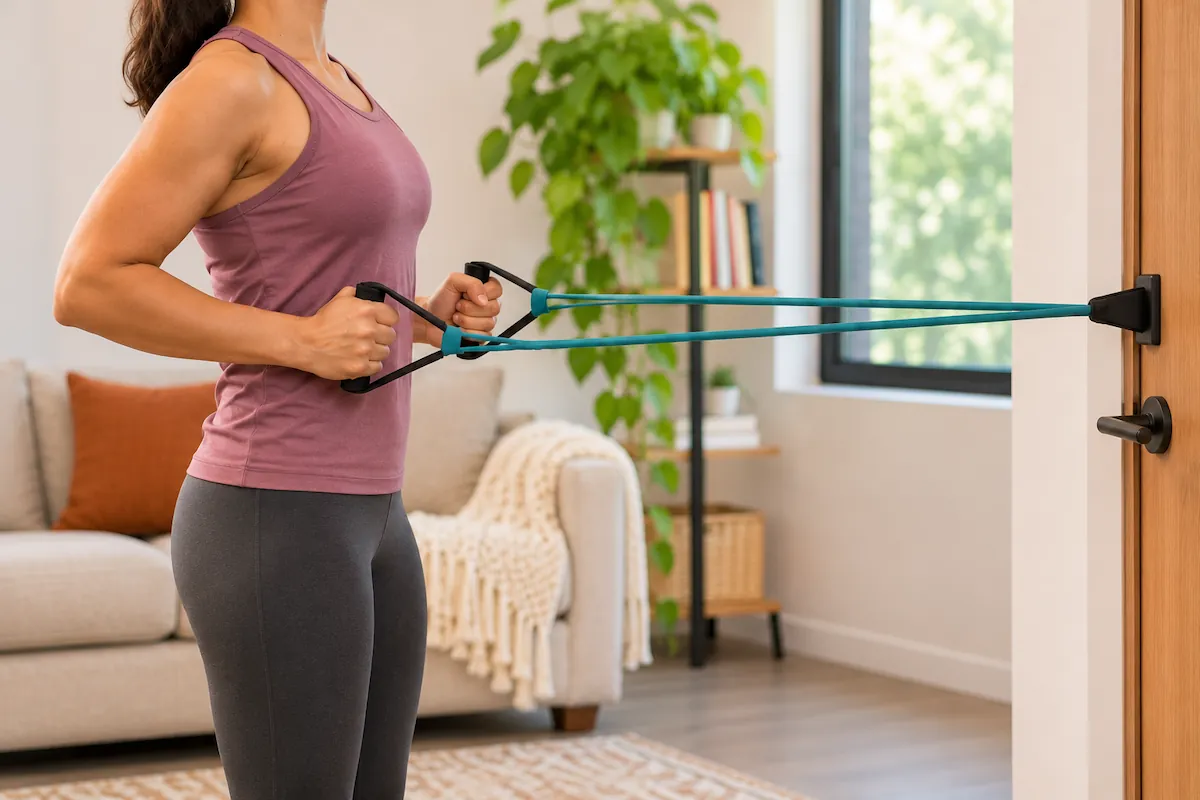
Exercise programs are the part of physical therapy you carry home. They rebuild strength, mobility and control so the progress you make in the clinic holds up in daily life.
You will never just be handed a sheet of paper. We build your program around your injury or condition, the time you really have and the space you’ll be doing it in. As you get stronger, the program changes with you.
Three ways we build strength
our program might use one of these, or all three.

Your personal program
Exercises chosen for your goals and fitted to your week, whether you have ten minutes and a hallway or an hour and a gym. We check in every visit and adjust as you progress.
Blood flow restriction training
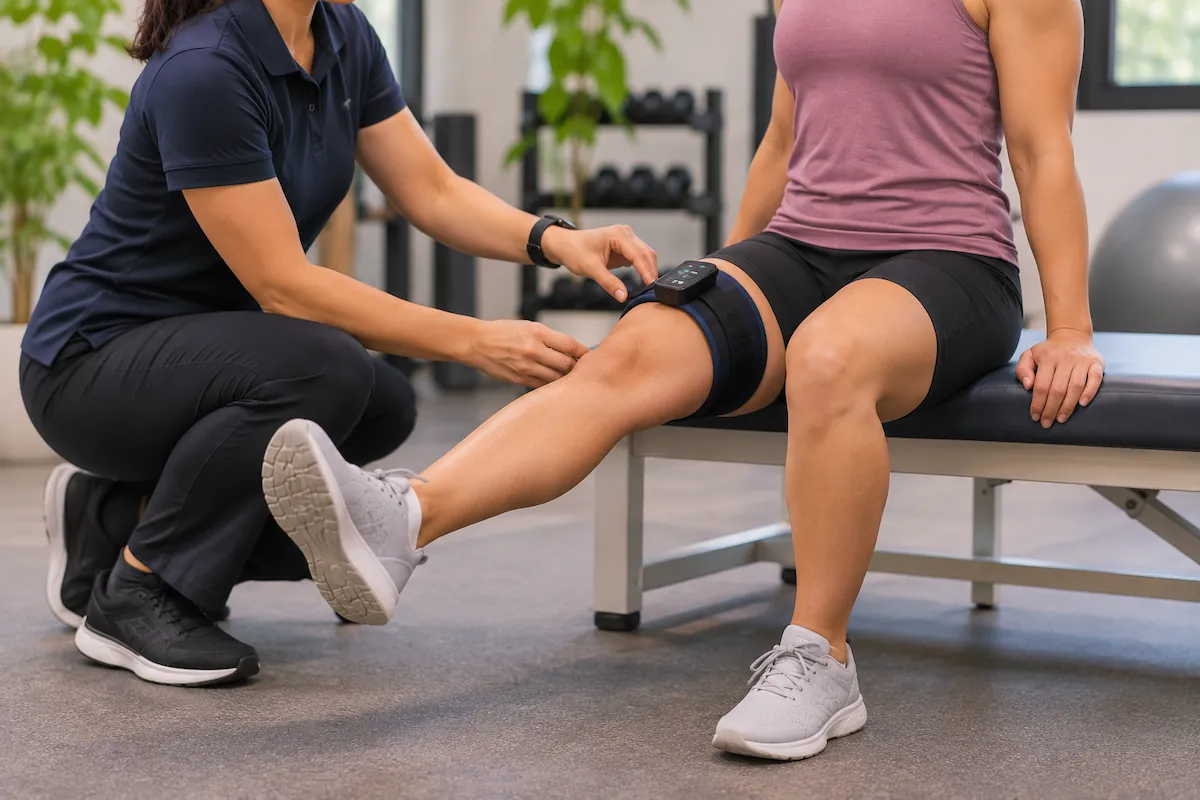
A cuff on the upper arm or thigh briefly limits blood flow while you exercise. That lets you build strength with much lighter weights, which takes stress off healing joints. Often used after injury or surgery.

Running assessment
We watch how you run, look at your stride and the strength behind it, and build a plan to keep you running with less pain and fewer setbacks.
What exercise programs help with
Every program is different, because every condition needs a different starting point.
Injury and surgery recovery
Rebuilding strength and confidence, step by step
Hypermobility, hEDS and HSD
Strength and control around joints that move too easily
Chronic pain
Moving more without setting off a flare
POTS and dysautonomia
Starting lying down or seated, and building tolerance from there
Long Covid and ME/CFS
Pacing first, guided by your symptoms, never pushing through a crash
Pelvic health
Pelvic floor and core exercises that fit your daily life
What a session looks like
Assessment first
We look at how you move, what you want to get back to, and how your body responds to effort.
We start where you are
Your first exercises match what your body can do today, not where we hope it will be.
Practice together
We coach you through each exercise so you know how it should feel and when to stop.
Take it home
You leave with a program that fits your time and space, and we update it every visit.
Is an exercise program right for you?
Often a good fit if you
• Are recovering from an injury or surgery
• Feel weak, stiff or unsteady in everyday movement
• Have tried exercise before and didn’t know if you were doing it right
• Want to get back to a sport, a run or a hobby
We may adapt or skip it if you
• Crash or feel much worse a day or two after activity
• Feel dizzy or lightheaded when you stand
• Have had recent surgery (we follow your surgeon’s guidance)
• Have a history of blood clots, circulation problems or uncontrolled blood pressure (relevant for blood flow restriction)
Offered at
Exercise programs FAQ
What if exercise makes my symptoms worse?
Tell us. Feeling worse a day or two after activity, sometimes called post-exertional malaise, is a signal to change the plan, not to push harder. For Long Covid, ME/CFS and POTS we start with pacing and build only as your body allows.
How much time will my exercise program take?
As much as you realistically have. Some programs take ten minutes a day, others are longer. We would rather you do a short program well than skip a long one.
Do I need equipment at home?
Usually not. Most exercise programs use body weight, a resistance band or things you already have. If something would really help, we’ll suggest it, and you can find what we use in our shop. As an Amazon Associate I earn from qualifying purchases.
Is blood flow restriction training safe?
When it is done by a trained therapist with the right equipment, it is generally well tolerated. We check your health history first and skip it if you have a history of blood clots, circulation problems or uncontrolled blood pressure.
What is a running assessment?
We watch you run, look at your stride and test the strength and mobility behind it. Then we build exercises to fix what’s causing pain or slowing you down.
Will my program change over time?
Yes. Your exercise program evolves as you do. We review it at each visit and make it harder, easier or different depending on how you’re responding.
Are exercise programs used on their own?
Often they are combined with manual therapy and therapeutic taping. Hands-on care eases pain and stiffness, and exercise makes the change last.
What should I wear?
Comfortable clothes you can move in and supportive shoes. If you’re coming for a running assessment, bring the shoes you run in.
Other Treatment Methods
Stronger, at your pace.
No pushing through, no one-size-fits-all. Just the right next step for your body.