
Trigger Point Dry Needling
Tried stretching, massage and rest? Some knots need a more direct approach.
What is trigger point dry needling?
Dry needling uses a thin, solid needle to reach a trigger point: a tight, tender knot inside a muscle. Trigger points can hurt where they are or send pain somewhere else, like a knot in your shoulder that causes a headache.
When the needle reaches the knot, the muscle often gives a brief twitch and then lets go. That can ease pain, free up movement and give the rest of your treatment a better starting point. It’s called “dry” because nothing is injected.
Dry needling vs Acupuncture
The needles look alike. The thinking behind them doesn’t.
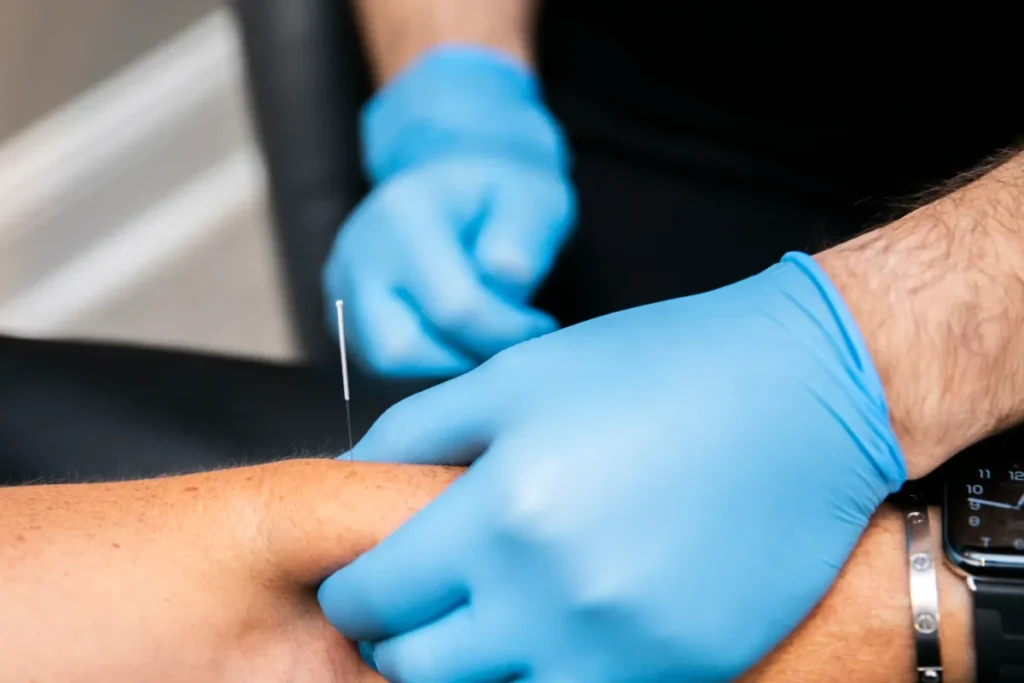
Dry Needling
BASED ON: Anatomy and how muscles work
TARGETS: Trigger points: tight, tender knots in muscle
DONE BY: Physical therapists with added dry needling training
PART OF: A full physical therapy plan, with exercise and hands-on care
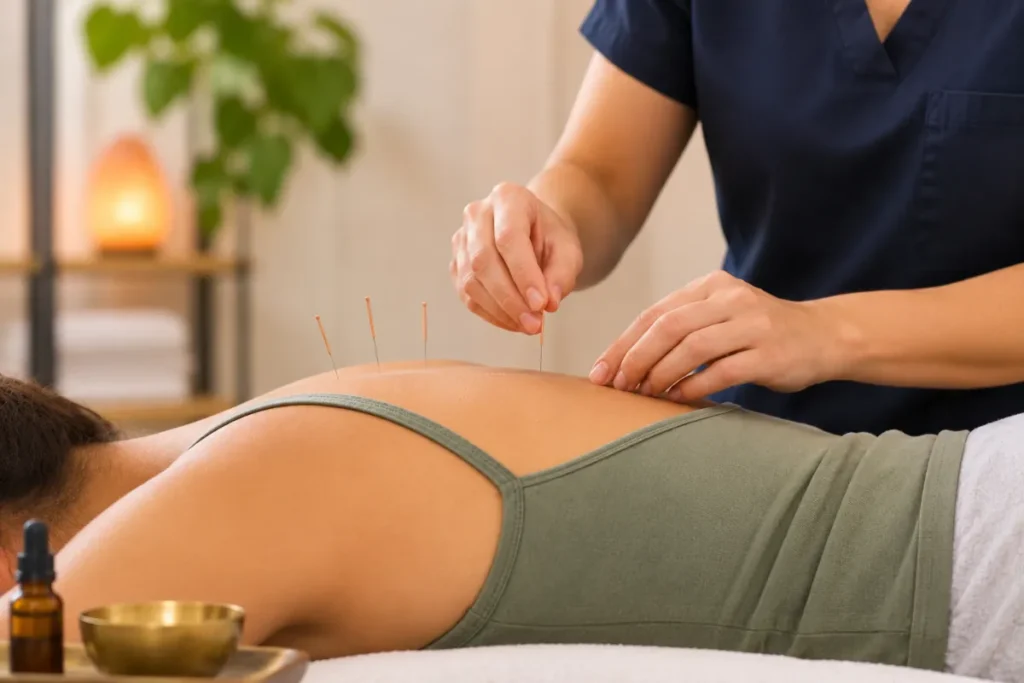
Accupuncture
BASED ON: Traditional Chinese medicine
TARGETS: Points along energy pathways (meridians)
DONE BY: Licensed acupuncturists
PART OF: Usually a standalone treatment
What dry needling helps with
We use dry needling when tight, irritable muscle is part of the problem, including:
Neck and shoulder pain
Knots from desk work, stress or sleeping awkwardly
Low back and hip pain
Tight back, hip and glute muscles that keep pulling you out of position
Tension headaches
Headaches that start with tight neck and shoulder muscles
Sports and overuse injuries
Muscles that tighten up from training or repeated movements
Myofascial and chronic pain
Ongoing muscle pain with trigger points that keep coming back
Muscle guarding with hypermobility
Muscles overworking to steady joints that move too easily
What a session looks like
Assessment first
We find the trigger points that match your pain and go through your health history.
You say yes
We explain each step before we start, and you can pause or stop at any point.
Needling
You’ll feel a quick prick, then maybe a twitch or deep ache in the muscle that fades within seconds.
Movement after
We follow with exercise or hands-on work while the muscle is relaxed. Some soreness for a day or two is normal.
Is dry needling right for you?
Often a good fit if you
• Have muscle pain that keeps coming back
• Can feel tight spots or knots that send pain elsewhere
• Have tension that limits how you move
• Haven’t got far with stretching or massage alone
We may adapt or skip it if you
• Take blood thinners or have a bleeding disorder
• Are pregnant (some areas are avoided)
• Have a strong fear of needles
• Have an infection, a skin condition or lymphedema in the area
Offered at


Dry needling FAQ
Does dry needling hurt?
Most people feel a quick prick, then a twitch or deep ache in the muscle that fades within seconds. Many find it less uncomfortable than they expected.
Is dry needling the same as acupuncture?
No. The needles are similar, but dry needling is based on anatomy and targets trigger points in muscle. Acupuncture comes from traditional Chinese medicine and works with energy pathways.
Will I be sore afterward?
You may feel sore, like after a hard workout, for a day or two. Small bruises sometimes appear. Gentle movement, heat and staying hydrated usually help.
What should I wear?
Loose clothing that lets us reach the area, such as shorts for the legs or a tank top for the neck and shoulders.
How soon will I notice a difference?
Some people move more easily right after the session. For others, the change shows up over the next day or two, once any soreness settles.
How many sessions will I need?
It depends on how long the problem has been there and how your muscles respond. Your therapist will give you a realistic idea after the first session.
Is dry needling safe?
Yes, when it’s done by a trained physical therapist. We use single-use sterile needles and avoid areas where needling isn’t recommended. Tell us about blood thinners, pregnancy or any health changes before each visit.
Is dry needling used on its own?
No. Dry needling relaxes the muscle and opens a short window. We follow it with exercise programs, manual therapy or therapeutic taping so the change lasts.
Other Treatment Methods
Muscle pain that keeps coming back?
We’ll find what’s holding your muscle tight, release it, and build the strength to keep it from coming back.