
Physical Therapy for Hypermobility, hEDS and HSD
Your joints move further than most. We help your muscles do the job your ligaments can’t.
When Your Joints Move Too Far
Joint hypermobility means your joints move further than most people’s. On its own, that isn’t a problem. Plenty of flexible people never have trouble. It becomes one when that extra range comes with pain, joints that slip or give way, and muscles that tire trying to hold everything together.
Hypermobile Ehlers-Danlos syndrome (hEDS) is an inherited connective tissue condition with specific diagnostic criteria that include hypermobility, skin and tissue features, and family history. Hypermobility spectrum disorders (HSD) cover people with symptomatic hypermobility who don’t meet every hEDS criterion. You may also see the older term symptomatic generalized joint hypermobility (S-GJH). The labels differ, but day to day the problems are often the same, and so is the physical therapy.
Hypermobility rarely travels alone. It often comes with POTS, pelvic floor symptoms, fatigue and widespread pain. Good care looks at the whole picture, not one joint at a time.
What Is Hypermobility Physical Therapy?
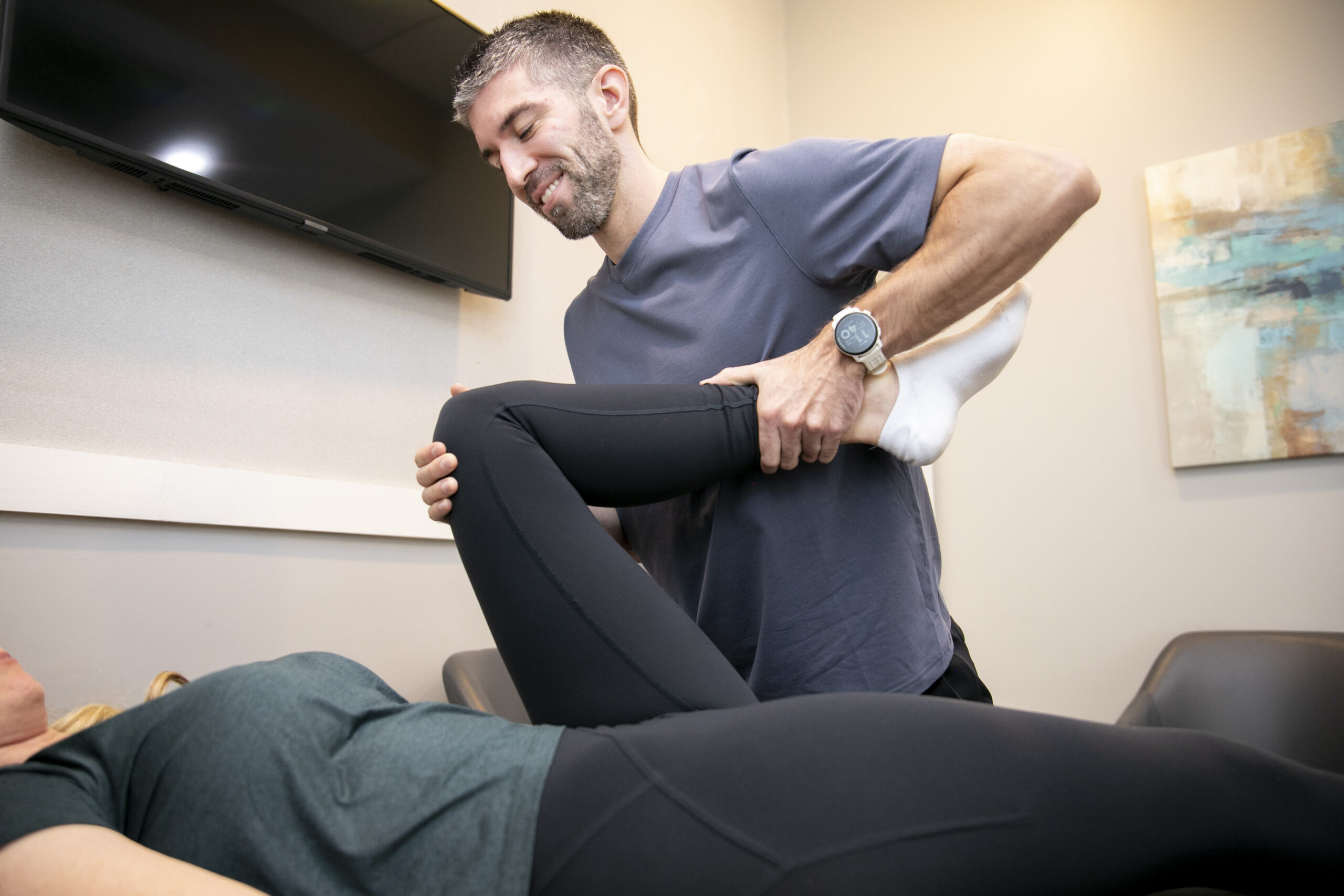
Hypermobility physical therapy builds stability your ligaments can’t provide. It trains your muscles to control joints through their full range, sharpens your sense of where your body is, and calms the pain and guarding that come from working at your limit all day.
Your joints need control, not more range.
Ligaments are the body’s straps, holding joints in place. In hEDS and HSD those straps are looser, so muscles have to do more of the work. When they can’t keep up, joints drift to the end of their range, tissues get irritated, and nearby muscles tighten to protect you. That tightness feels like you need to stretch. Stretching gives brief relief, then you’re back to square one.
The longer-lasting answer is control: low-load strength and stability work, starting where your joints feel safe and building toward the speed, load and positions your life asks for. Progress is slower and steadier than standard rehab, because tissues and nervous systems in hypermobility need more time to adapt.
Browse Your Specific Symptoms
Hypermobility shows up differently in every body. Find what matches your days below. If a symptom seems unrelated, bring it to your first visit anyway. It often isn't.
Joints and Stability
Clicking, popping or giving way
Frequent sprains and ankle rolls
Joint pain with no clear injury
Feeling unsteady on stairs or uneven ground
Muscles and Pain
Widespread or shifting pain
Muscles that tire quickly
Slow recovery after activity
Pain that flares after stretching
Balance and Body Awareness
Poor balance
Trouble sensing where a joint is
Falls or near-falls
Neck, Jaw and Spine
Jaw pain or clicking (TMJ)
Back pain
Rib pain or ribs that slip
Related Conditions
Pelvic floor symptoms
Chronic widespread pain
Symptomatic generalized joint hypermobility (S-GJH)
Recovery after joint surgery
Getting Back to Daily Life
Lifting, carrying and childcare
Sitting and desk work
Yoga, dance, climbing and sport with control
Planning for and recovering from flares
How We Treat Hypermobility, hEDS and HSD
Three things drive every case. We treat all three.
Hypermobility involves connective tissue that lets joints move further than they should, a nervous system that guards and senses pain more strongly, and everything around it: sleep, work, posture and the activities you love. Most care looks at one of these. We look at all three.

Find The Cause
We look at which joints give way, when pain started and what sets off flares, so we know whether control, strength, fatigue or pain sensitivity is driving your symptoms.

Settle Your System
Gentle hands-on work, breathing and graded movement calm the muscles that guard loose joints, so your body feels safe moving through its full range again.

Change What's Around
We look at sleep, desk setup, lifting, sport and daily tasks, then change how you move through them so your joints aren't working at their limit all day.
Treatment Methods We Use For Hypermobility, hEDS and HSD Care
Find Hypermobility Care Near You
Hypermobility physical therapy is available at all four Set PT clinics.


Washington DC
Two clinics: Metro Center in Columbia Square, and West End at 24th and M.

Frequently Asked Questions
Can physical therapy help hEDS and HSD?
Yes. Physical therapy is one of the main treatments for both. Strength and control work helps muscles support loose joints, which can mean fewer subluxations, less pain and more confidence moving.
What's the difference between hEDS and HSD?
Is being hypermobile always a problem?
No. Many people are flexible and never have symptoms. Hypermobility needs treatment when it comes with pain, instability, frequent injuries or fatigue.
Do I need a diagnosis before I book?
No. If your joints feel loose, unstable or painful, we can assess you. If what we find suggests hEDS or HSD, we’ll point you toward a doctor who can confirm it.
Should I stop stretching?
Often, yes, at least the deep end-of-range stretching. It can feel good but rarely lasts. We usually swap it for strength and control work that eases the tightness for longer.
Will strengthening make my pain worse?
It shouldn’t, if the dose is right. We start with low loads and small ranges, watch how your body responds over the next day or two, and build slowly from there.
What happens at my first appointment?
You get a full hour, one-on-one. We go through your history, check how your joints move and where control drops off, and look at balance and body awareness. You leave with a few exercises you can start right away.
Can you help with subluxations and dislocations?
Yes. We build control around joints that slip and help you work out what triggers them. A full dislocation, a first-time dislocation, or one with numbness or major swelling needs a doctor first.
I also have POTS. Can you treat both?
Yes. POTS and hypermobility often go together, so we plan for both: stability work in positions that don’t trigger upright symptoms. (link: /conditions/pots-physical-therapy/)
Do I need a referral?
No, not in any of our three cities. You can book directly, though each one has its own visit or time limit before a physician referral is needed.
Will you work with my doctors?
Yes, with your permission. We share findings and progress with your rheumatologist, geneticist, primary care doctor or other specialists.
How long until I feel more stable?
It varies. Hypermobile tissues take longer to adapt, so most people work with us for several months. Many feel steadier in daily tasks well before that.
What Our Patients Say
Other Conditions We Treat
Stable starts with control.
Loose joints don’t have to mean a life of sprains, slips and flares. We start with what your body can control today and build the strength to hold the rest.