
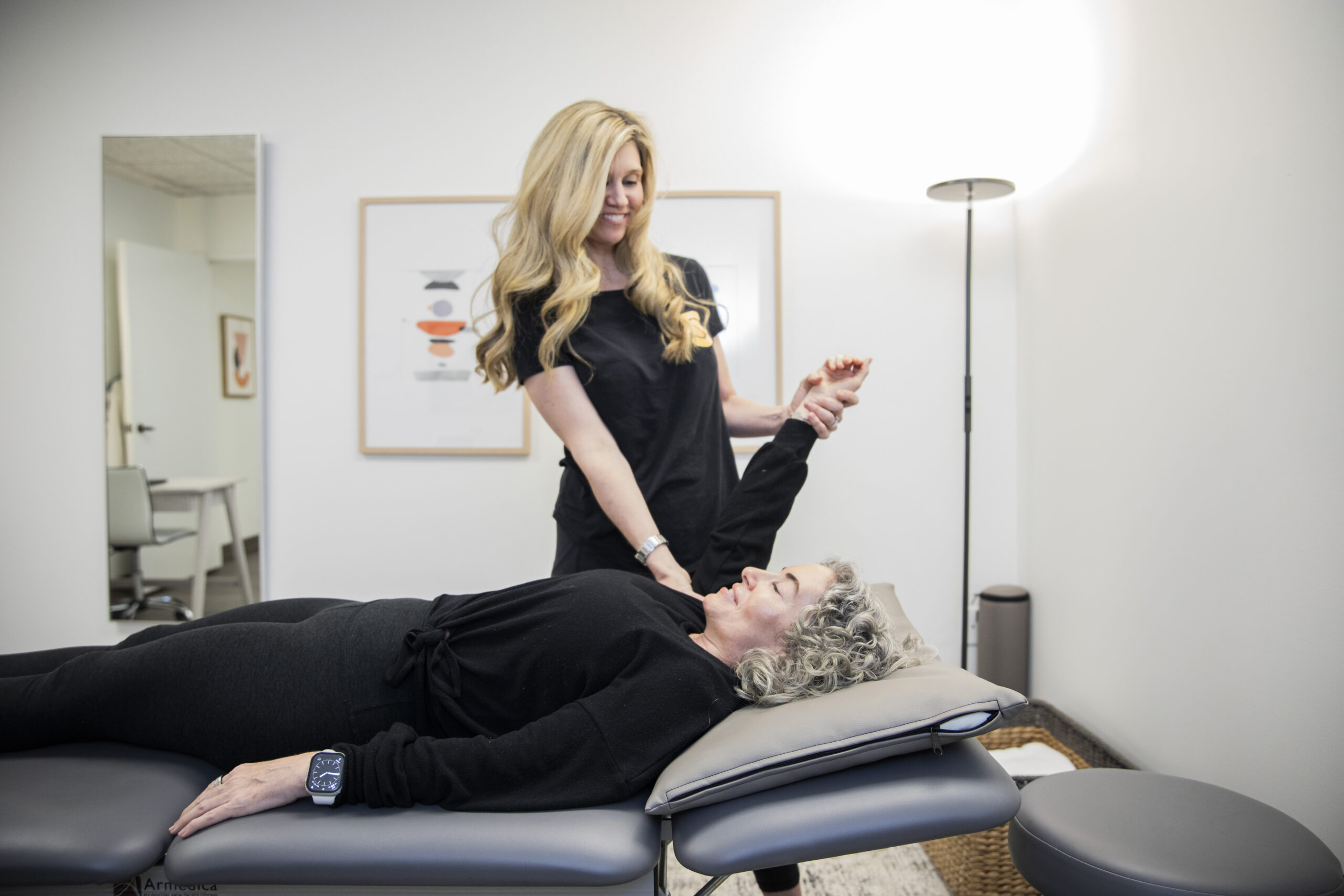

POTS and Dysautonomia Physical Therapy in Atlanta

Georgia summers make POTS harder. We build a plan that still works when it’s hot.

POTS Physical Therapy Near Marietta and Smyrna

Our clinic is up north in the city of Atlanta, where I-285 meets I-75, a short drive from Marietta and Smyrna. Patients also come in from Buckhead, West Midtown, Midtown and Vinings. We know a hot parking lot can be the hardest part of getting here, so first visits are paced, with time to lie down and recover before you head home.

What Is POTS Physical Therapy?

POTS physical therapy retrains how your body handles being upright. We build the leg and core strength that pushes blood back to your heart, steady your breathing, and give you strategies for the moments symptoms hit. Your doctor manages fluids, salt and medication. We take care of the movement.

Heat counts as a load.

Heat widens your blood vessels to cool you down, which lets even more blood pool in your legs when you stand. With POTS, a humid afternoon can feel like a workout before you’ve done anything. That’s why Atlanta patients often tell us they’re fine in March and struggling by June.

So we plan your year around it: harder sessions in cooler months and cooler hours, indoor and lying-down options for summer, and simple cooling strategies for errands, yard work and the car. The goal is a plan that doesn’t fall apart every July.

Browse Your Specific Symptoms

For a lot of Atlanta patients, symptoms shift with the seasons. Find what matches your days below, and tell us if your summers look different from your winters.

Racing heart when you stand
Dizziness or lightheadedness when upright
Feeling faint or fainting
Worse standing still than walking
Palpitations and shakiness
Red or purple legs and feet when standing
Cold hands and feet
Heat intolerance
Feeling worse after hot showers
Swelling in the legs
Shortness of breath when upright
Fast or shallow breathing (breathing pattern disorder)
Air hunger
Chest tightness
Brain fog
Fatigue
Headaches
Neck and shoulder ache when upright (“coat hanger” pain)
Unrefreshing sleep
Feeling worse after large meals
Standing in lines or at events
Bad mornings
Flares around your menstrual cycle
Flares after illness or travel
POTS after Covid
POTS with hEDS or HSD
Orthostatic intolerance
Orthostatic hypotension
Vasovagal (reflex) syncope
Inappropriate sinus tachycardia

Returning to exercise
Standing to cook, shower or get ready
Returning to work or school
Planning for and recovering from flares

How We Treat POTS and Dysautonomia

Three things drive every case. We treat all three.

POTS involves how your body moves blood when you stand, a nervous system that overreacts to being upright, and everything around it: sleep, heat, meals, work and stress. Most care looks at one of these. We look at all three.

Find The Cause

We check your heart rate lying and standing, review your history and track your symptoms, so we know what sets off your flares and how much upright time you can handle today.

Settle Your System

Breathing work, counter-maneuvers like leg crossing and muscle squeezes, and a gradual move from lying to upright exercise teach your body to respond to standing more calmly.

Change What's Around

We look at heat, meals, showers, work and daily tasks, then find small changes, like sitting to cook or running errands in cooler hours, that cut your time stuck standing.

Treatment Methods We Use For Orthopedic Care

Frequently Asked Questions

No. Georgia lets you see a physical therapist for up to 21 days or 8 visits, whichever comes first, without a referral. After that you’ll need one from a physician, and we can help arrange it.
Heat widens blood vessels, so more blood pools when you stand and your heart works harder to keep up. Hot showers, a hot car and humid afternoons can all set off symptoms. We build heat into your plan instead of hoping you avoid it.
Usually not at first. We start with indoor exercise, lying down or seated. As your tolerance grows, we plan outdoor activity for cooler hours and cooler months.
Sit or lie down if you can. If you can’t, cross your legs, squeeze your thighs and buttocks, or rise onto your toes to push blood back up. We practice these with you until they’re automatic.
About an hour, one-on-one, at your pace. We review your history, check your heart rate lying and standing, and do light testing. You leave with first steps, including what to do on hot days.
It helps but isn’t required. A smartwatch or chest strap makes your response to standing easier to track. Without one, a simple symptom log works.
Most POTS exercise programs run several months. Many people feel steadier well before the end, and we track your numbers so you can see it happening.

What Our Atlanta Patients Say

Your Therapist

Get your day back, one step at a time.

If standing, errands or a full workday keep knocking you back, we’ll start from where your body is today and build from there. We see patients from Marietta, Smyrna and north Atlanta.