
Orthopedic Physical Therapy
When Pain Starts Making Your Decisions
You skip the run. You take the elevator. You stop carrying things on your left side. Joint and muscle pain has a way of shrinking your day, one workaround at a time.
Orthopedic physical therapy treats the source: the bones, joints, muscles, tendons and ligaments that move you, and the nerves that connect them. We offer orthopedic physical therapy at our clinics in Atlanta, Washington DC and New York, for new injuries and for pain you’ve lived with for years.
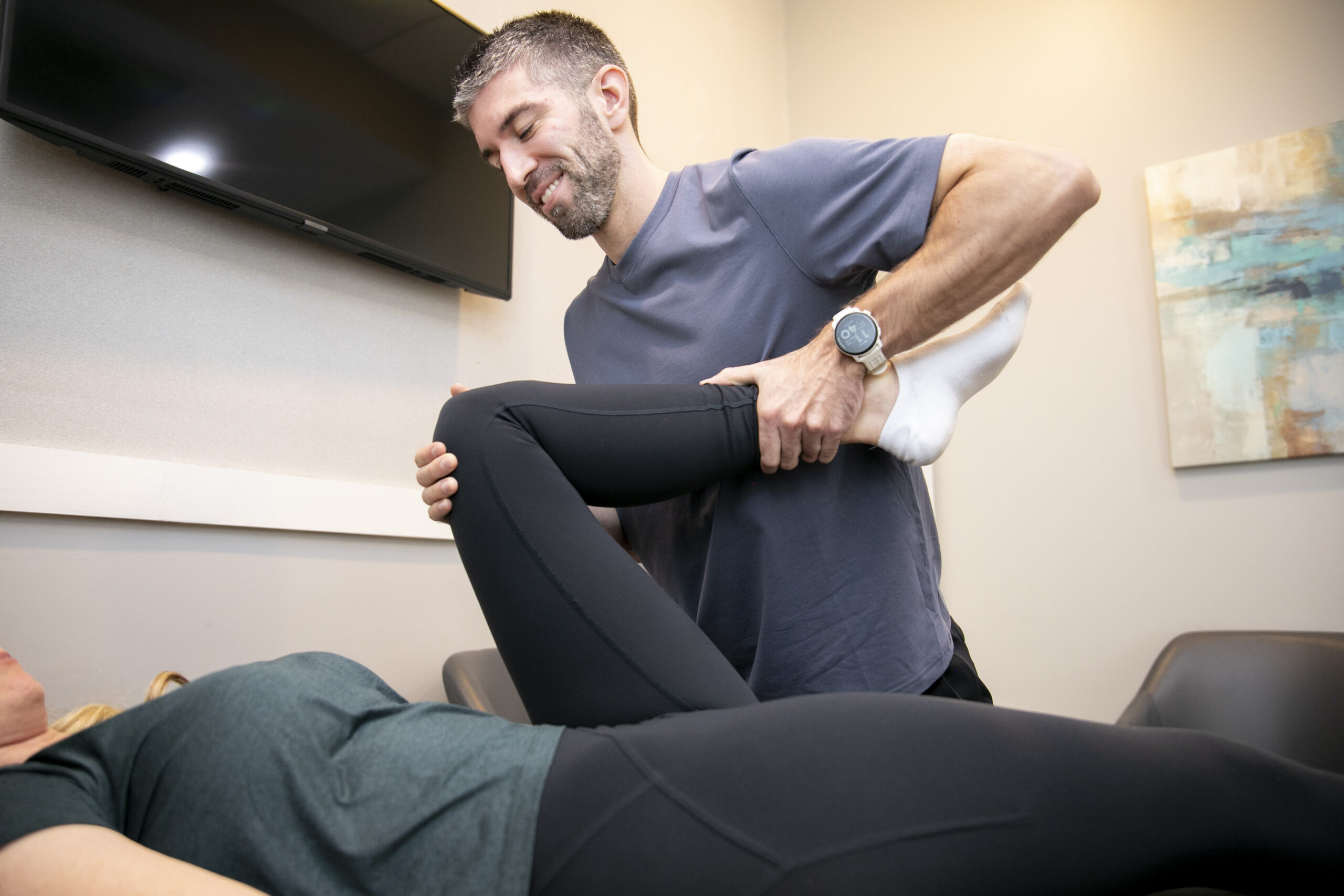
What Is Orthopedic Physical Therapy?
It's not just for athletes
- After a sprain, strain, fall or sports injury
- Before and after joint replacement, ligament repair or spine surgery
- With arthritis that makes stairs, walking or gardening harder
- When desk work leaves your neck, shoulders or back sore by the end of the day
- With tendon pain that flares every time you return to activity
- With joint instability linked to hypermobility, hEDS and HSD
Signs worth getting checked
- Pain that hasn’t eased after two or three weeks
- Stiffness that makes mornings, or getting out of a chair, hard
- A joint that clicks, catches, locks or gives way
- Pain that wakes you at night or returns every time you exercise
- Numbness, tingling or weakness running into an arm or leg
- Moving differently to protect one side
If any of these sound familiar, an evaluation is the next step. The full list of conditions is below.
Browse Your Specific Symptoms
Find your injury, diagnosis or situation below, grouped by area of the body, from a recent sprain to a joint replacement to back pain you've had for years. Don't see yours? Ask us. These are the most common reasons people come in, not the only ones.
Shoulder Injuries
Shoulder Impingement
Labral Tears
Frozen Shoulder (Adhesive Capsulitis)
Bursitis
Post-Surgical Rehab (For example, Shoulder Replacement)
Knee Injuries
Meniscus Tears
Patellar Tendinitis
Knee Osteoarthritis
Patellofemoral Pain Syndrome
Hip Injuries
Hip Osteoarthritis
Tendinitis (For example, Hip Flexors, IT Band)
Trochanteric Bursitis
Post-Hip Replacement Rehab
Piriformis Syndrome
Spine and Neck Issues
Sciatica
Chronic Low Back Pain
Neck Pain & Stiffness
Degenerative Disc Disease
Facet Joint Dysfunction
Post-Surgical Spine Rehab
Ankle and Foot Injuries
Achilles Tendinitis
Plantar Fasciitis
Stress Fractures
Bunions
Tarsal Tunnel Syndrome
Elbow and Wrist Injuries
Golfer’s Elbow (Medial Epicondylitis)
Carpal Tunnel Syndrome
Wrist Sprains & Strains
De Quervain’s Tenosynovitis
Post-Surgical Rehab (For example, Tendon Repairs)
Other Conditions We Treat
Tendinitis & Tendinosis (e.g., Biceps, Rotator Cuff, Achilles)
Osteoarthritis (OA) Management
Repetitive Strain Injuries (RSI)
Joint Instability and Hypermobility (hEDS and HSD)
Muscle Strains & Ligament Sprains
How We Treat Orthopedic Pain and Injuries
Three things drive every case. We treat all three.

Find The Cause
Most people come in knowing where it hurts, often with a diagnosis or two behind them. What we want to know is why it started and why it hasn't resolved. Sometimes the painful spot isn't the part that needs the work.

Settle Your System
When pain goes on for months, your nervous system starts reacting faster and harder than it needs to. It's a physical change, and it explains why pain can feel out of proportion to what's wrong. We treat it as part of the plan, not something you wait out.

Change What's Around
We'll ask about your sleep, what you eat, how much water you drink, and what's been stressful lately. These affect how fast you heal and how much pain you feel. Wherever there's something we can adjust, we'll work on it with you.
Treatment Methods We Use For Orthopedic Care
Find Orthopedic Care Near You
Orthopedic physical therapy is available at all four Set PT clinics.


Washington DC
Two clinics: Metro Center in Columbia Square, and West End at 24th and M.

Frequently Asked Questions
How do I know if I need orthopedic physical therapy?
What does an orthopedic physical therapist actually do?
What happens at my first appointment?
What should I wear?
Do I need an X-ray or MRI before starting?
Do I need a doctor's referral for orthopedic PT?
Should I rest an injury or keep moving?
Will physical therapy get me back to my sport?
Should I do physical therapy before or after surgery?
Can physical therapy help me avoid surgery?
Is physical therapy for back pain worth trying if nothing else has worked?
Does physical therapy help with arthritis?
Is dry needling painful?
You may feel a brief ache or twitch as the needle reaches a tight spot in the muscle, then mild soreness for a day or so, like after a workout. It’s always optional, and your therapist only suggests it when it fits your plan.