
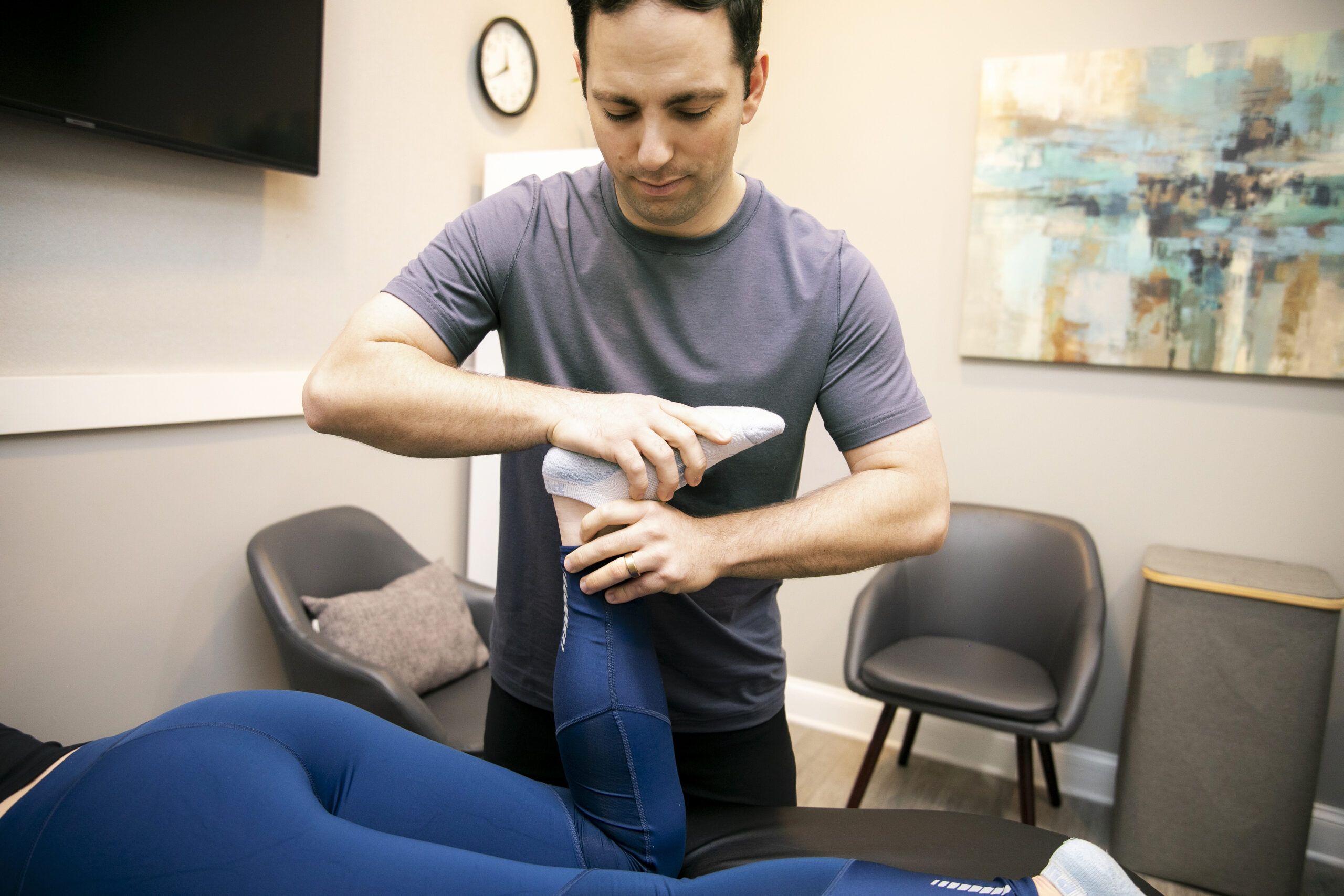

Orthopedic Physical Therapy in Washington DC

Whether it started on a run or at your desk, it has a cause we can find.

Orthopedic Physical Therapy at Metro Center and West End

We have two clinics in Washington DC. Metro Center is on the concourse level of Columbia Square on 13th Street, inside One to One Fitness, an easy walk to the National Mall. West End sits at 24th and M, between Foggy Bottom and Georgetown, a short walk from Foggy Bottom station.

At Metro Center, being inside a gym means rehab can move from the treatment table onto the gym floor. Whether you want to get back to lifting, train for a race, or just get through the workday without your back complaining, orthopedic physical therapy in Washington DC is built around what you need to return to.

What Is Orthopedic Physical Therapy?

Orthopedic physical therapy treats the musculoskeletal system: bones, joints, muscles, tendons and ligaments, plus the nerves that run between them. It covers new injuries, wear-and-tear conditions, recovery around surgery, and pain that has outlasted the original problem.

What a scan shows, and what it doesn't

Many people arrive with an MRI report full of words like bulge, tear or degeneration. Those findings are real, but they are also common in people who have no pain at all. A scan shows structure. It can’t tell you why something hurts, or how much your body can handle.
That’s what the assessment is for. We look at how you move, what provokes the pain and what calms it, and then build the plan around function, not the report. If anything suggests the scan needs a closer look, we’ll send you back to your doctor.

Browse Your Specific Symptoms

Browse by area of the body below, from runner's knee and lifting injuries to a post-op shoulder or years of low back pain. Not listed? Ask us.

Rotator Cuff Tears
Shoulder Impingement
Labral Tears
Frozen Shoulder (Adhesive Capsulitis)
Bursitis
Post-Surgical Rehab (For example, Shoulder Replacement)
ACL Tears & Reconstruction Rehab
Meniscus Tears
Patellar Tendinitis
Knee Osteoarthritis
Patellofemoral Pain Syndrome
Hip Labral Tears
Hip Osteoarthritis
Tendinitis (For example, Hip Flexors, IT Band)
Trochanteric Bursitis
Post-Hip Replacement Rehab
Piriformis Syndrome
Herniated Discs
Sciatica
Chronic Low Back Pain
SI Joint or Tailbone Pain
Neck Pain & Stiffness
Degenerative Disc Disease
Facet Joint Dysfunction
Post-Surgical Spine Rehab
Ankle Sprains & Strains
Achilles Tendinitis
Plantar Fasciitis
Stress Fractures
Bunions
Tarsal Tunnel Syndrome
Tennis Elbow (Lateral Epicondylitis)
Golfer’s Elbow (Medial Epicondylitis)
Carpal Tunnel Syndrome
Wrist Sprains & Strains
De Quervain’s Tenosynovitis
Post-Surgical Rehab (For example, Tendon Repairs)

Tendinitis & Tendinosis (e.g., Biceps, Rotator Cuff, Achilles)
Osteoarthritis (OA) Management
Repetitive Strain Injuries (RSI)
Joint Instability and Hypermobility (hEDS and HSD)
Muscle Strains & Ligament Sprains

How We Treat Orthopedic Pain and Injuries

Three things drive every case. We treat all three.

Orthopedic pain rarely has one cause. It lives in the tissue, in how your nervous system has learned to read what that tissue is doing, and in everything happening in your life around it. Most care addresses the first and stops there. That’s why so many people arrive here having already tried something that almost worked.

Find The Cause

Most people come in knowing where it hurts, often with a diagnosis or two behind them. What we want to know is why it started and why it hasn't resolved. Sometimes the painful spot isn't the part that needs the work.

Settle Your System

When pain goes on for months, your nervous system starts reacting faster and harder than it needs to. It's a physical change, and it explains why pain can feel out of proportion to what's wrong. We treat it as part of the plan, not something you wait out.

Change What's Around

We'll ask about your sleep, what you eat, how much water you drink, and what's been stressful lately. These affect how fast you heal and how much pain you feel. Wherever there's something we can adjust, we'll work on it with you.
Treatment Methods We Use For Orthopedic Care

Frequently Asked Questions

No. DC lets you start physical therapy without one. If you aren’t making clear progress within 30 days, we’ll bring your doctor in. If you already have a referral, bring it: it tells us what they’re seeing.
Often, yes. Many of these findings respond well to the right exercise and loading. Your therapist will explain what the report means for you and refer you back to your doctor if anything needs medical follow-up.
Your first visit is a full hour. We go through your history, goals and what aggravates the pain, then look at how you move. You leave knowing what we think is going on and what the plan is.
That’s the plan. We work back from your goal, whether that’s the Cherry Blossom Ten Miler, the Marine Corps Marathon or your usual loop, and build mileage back with clear checkpoints.
Both help. Getting stronger before surgery often makes recovery easier. After surgery, post-surgical physical therapy in Washington DC follows your surgeon’s protocol and gets you back to full strength.
You may feel a quick ache or twitch as the muscle releases, then mild soreness for a day or so. It’s always optional.
Many people feel a difference within the first few weeks. Your therapist sets milestones from the first visit, so you can see progress as it happens.

What Our Washington DC Patients Say

Your Therapist

Get back to the run, the lift or the workday.

A race on the calendar, a lift you’ve stopped doing, a back that gives out by mid-afternoon: none of it has to stay that way. If you’re looking for physical therapy in downtown DC or near Foggy Bottom and Georgetown, choose the clinic closest to you and let’s find out what’s driving it.