
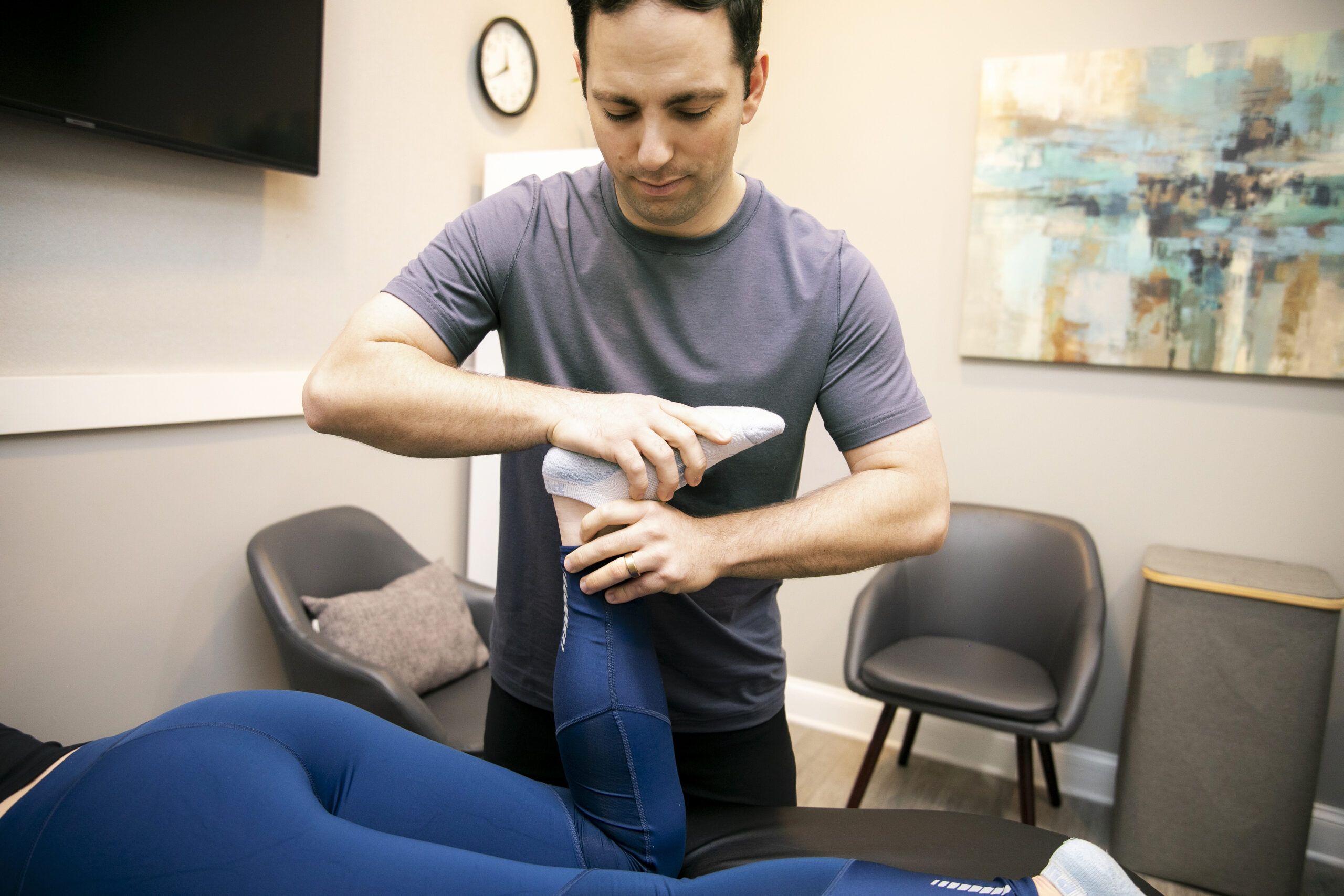

POTS and Dysautonomia Physical Therapy in Washington DC
Lines, receptions, long Metro escalators. Standing still is where POTS shows up, so that’s where we start.
POTS Physical Therapy in Downtown DC and the West End
We treat POTS and dysautonomia at two DC clinics. Metro Center is downtown near Penn Quarter, and West End sits near Foggy Bottom, Georgetown and the George Washington University campus. Many of our patients have jobs that keep them on their feet in ways nobody schedules: briefings, events, security lines, a long wait on a Metro platform. Those are the moments we plan around.
What Is POTS Physical Therapy?
Standing still is harder than walking.
When you walk, your calf and thigh muscles squeeze the veins in your legs and push blood back toward your heart. Standing still switches that pump off, so blood pools and your heart races to compensate. That’s why a five-minute line can hit harder than a twenty-minute walk.
We teach you quiet counter-maneuvers like shifting your weight, crossing your legs and squeezing your thighs. We build the strength that makes that muscle pump work better. And we help you plan the standing parts of your week, from receptions to the escalator at your station.
Browse Your Specific Symptoms
For many DC patients, the worst moments come standing still: in a line, at an event, on a platform. Find what matches your days below.
Standing and Heart Rate
Dizziness or lightheadedness when upright
Feeling faint or fainting
Worse standing still than walking
Palpitations and shakiness
Circulation and Temperature
Cold hands and feet
Heat intolerance
Feeling worse after hot showers
Swelling in the legs
Breathing and Chest
Fast or shallow breathing (breathing pattern disorder)
Air hunger
Chest tightness
Brain and Energy
Fatigue
Headaches
Neck and shoulder ache when upright (“coat hanger” pain)
Unrefreshing sleep
Everyday Triggers
Standing in lines or at events
Bad mornings
Flares around your menstrual cycle
Flares after illness or travel
Related Conditions
POTS with hEDS or HSD
Orthostatic intolerance
Orthostatic hypotension
Vasovagal (reflex) syncope
Inappropriate sinus tachycardia
Getting Back to Daily Life
Returning to exercise
Standing to cook, shower or get ready
Returning to work or school
Planning for and recovering from flares
How We Treat POTS and Dysautonomia
Three things drive every case. We treat all three.
POTS involves how your body moves blood when you stand, a nervous system that overreacts to being upright, and everything around it: sleep, heat, meals, work and stress. Most care looks at one of these. We look at all three.

Find The Cause
We check your heart rate lying and standing, review your history and track your symptoms, so we know what sets off your flares and how much upright time you can handle today.

Settle Your System
Breathing work, counter-maneuvers like leg crossing and muscle squeezes, and a gradual move from lying to upright exercise teach your body to respond to standing more calmly.

Change What's Around
We look at heat, meals, showers, work and daily tasks, then find small changes, like sitting to cook or running errands in cooler hours, that cut your time stuck standing.
Treatment Methods We Use For Orthopedic Care
Frequently Asked Questions
Do I need a referral for physical therapy in DC?
No. In DC you can see a physical therapist directly. If you haven’t made measurable progress within 30 days, we’ll refer you to a physician for review.
Why is standing still worse than walking?
Walking uses your leg muscles to pump blood back to your heart. Standing still doesn’t, so more blood pools. That’s why lines and receptions are often harder than the walk to the office.
What can I do at a standing event or in a long line?
Shift your weight, cross your legs, squeeze your thighs and buttocks, or rise onto your toes. Lean on a wall or take a seat when you can. We practice these with you until they’re second nature.
Can you help me ask for changes at work?
Yes. We can document your symptoms, limits and progress for your doctor or employer, for example to support a stool at a standing post, a sit-stand desk or seated meetings.
What happens at my first visit?
About an hour, one-on-one, with breaks whenever you need them. We cover your history and your workday, check your heart rate lying and standing, and do light testing.
Will you update my doctor?
Yes, with your consent. We share heart rate findings and progress with your cardiologist, neurologist or primary care doctor.
How soon will standing feel easier?
Most POTS exercise programs run several months. Many people find lines and long days easier partway through, and we track your heart rate so the change is visible.
What Our Washington DC Patients Say
Your Therapist
Brandon Voyer
PT, DPT
Brandon draws on a wide range of treatment approaches to find a path forward you haven’t tried yet.
Matthew Johnston
PT, DPT
Matthew starts with your own account of the problem, because the patient’s perspective is what points him to the right answer.
Morgan Panzer
PT, DPT
Morgan builds your plan with you, never forcing an approach that hasn’t worked for you before.
Imani Lockwood
PT, DPT
Imani brings curiosity to every case and builds a plan that’s realistic enough to fit your life.
Other Conditions We Treat in Washington DC
Make standing still easier.
If lines, events or Metro platforms near Foggy Bottom, Georgetown or downtown keep setting off your POTS, we’ll build a plan for the standing parts of your week.